
Risata Bali Resort & Spa | Events
Nyepi in Bali: a Day of Silence & Reflection
The day comes to a gentle halt. Streets fall empty. Lights dim. No sound but the soft whispers of the wind. Nyepi Day is unlike any other New Year celebration in the world — a sacred pause for stillness and self-reflection.
What is Nyepi?
Once a year, the island celebrates Nyepi or the Day of Silence, marking the Balinese New Year based on the Saka calendar. While most New Year celebrations around the world beams with grand festivities, loud music and fireworks, the Hindu community in Bali takes this moment to meditate and pray in silence.
During Nyepi, daily activities come to a complete stop to create a space of deep stillness, free from the clamor of everyday life and the pull of human desire.
People do not leave their homes (except in cases of emergency or illness), lights are kept off, and work and entertainment cease. This day of silence is intended to create an atmosphere of true stillness—free from the noise of everyday life and from human desires or greed—allowing for the purification of Bhuwana Agung (the universe) and Bhuwana Alit (the human self).
This year, Nyepi in Bali falls on March 19, with festivities starting from the night before.
Crafting the Banten (Offerings)
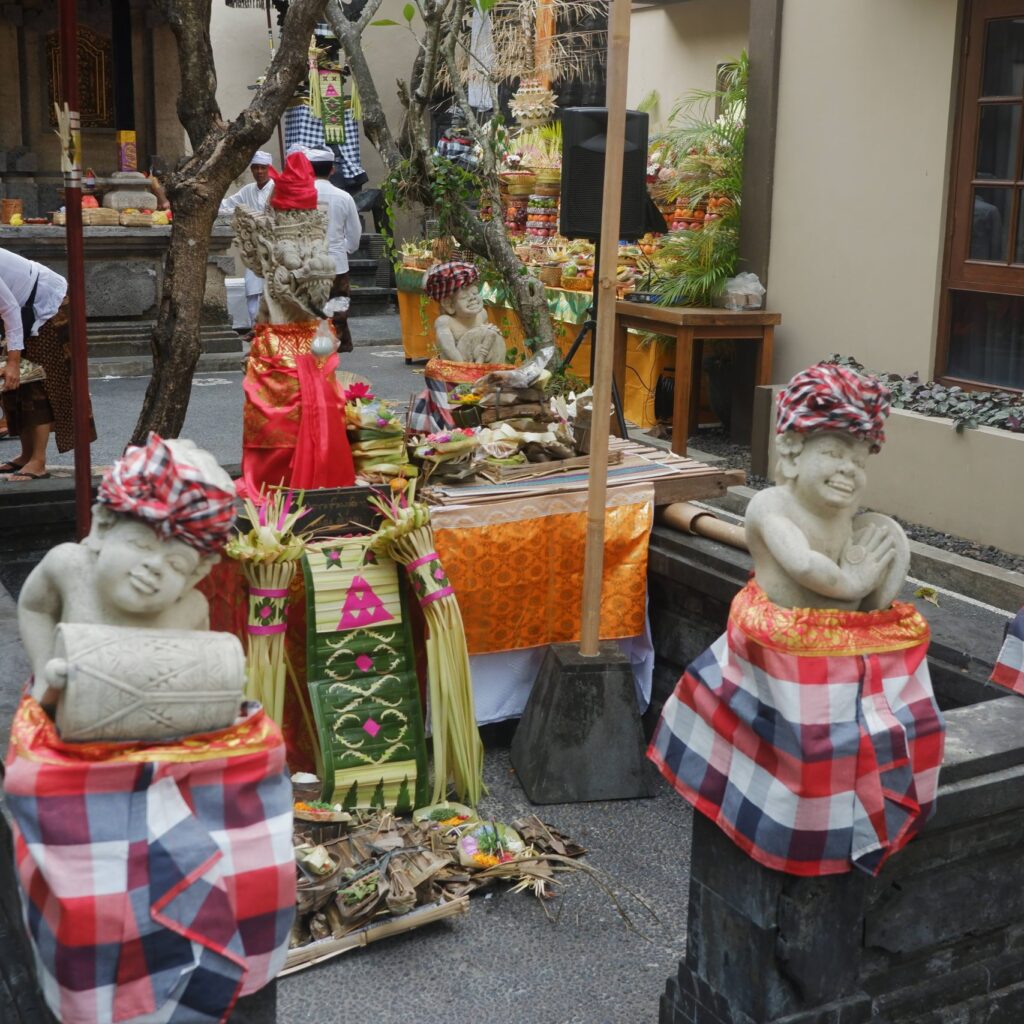
Preparations for the Odalan ceremony often begin several days in advance. The process starts with the cleansing and purification of the temple grounds, creating a sacred space for the celebrations to come. The shrines and the “sacred room” are then adorned with colorful fabrics and handwoven coconut leaves. Yet at the heart of this ritual lies the most meaningful element of all — the banten or offerings.
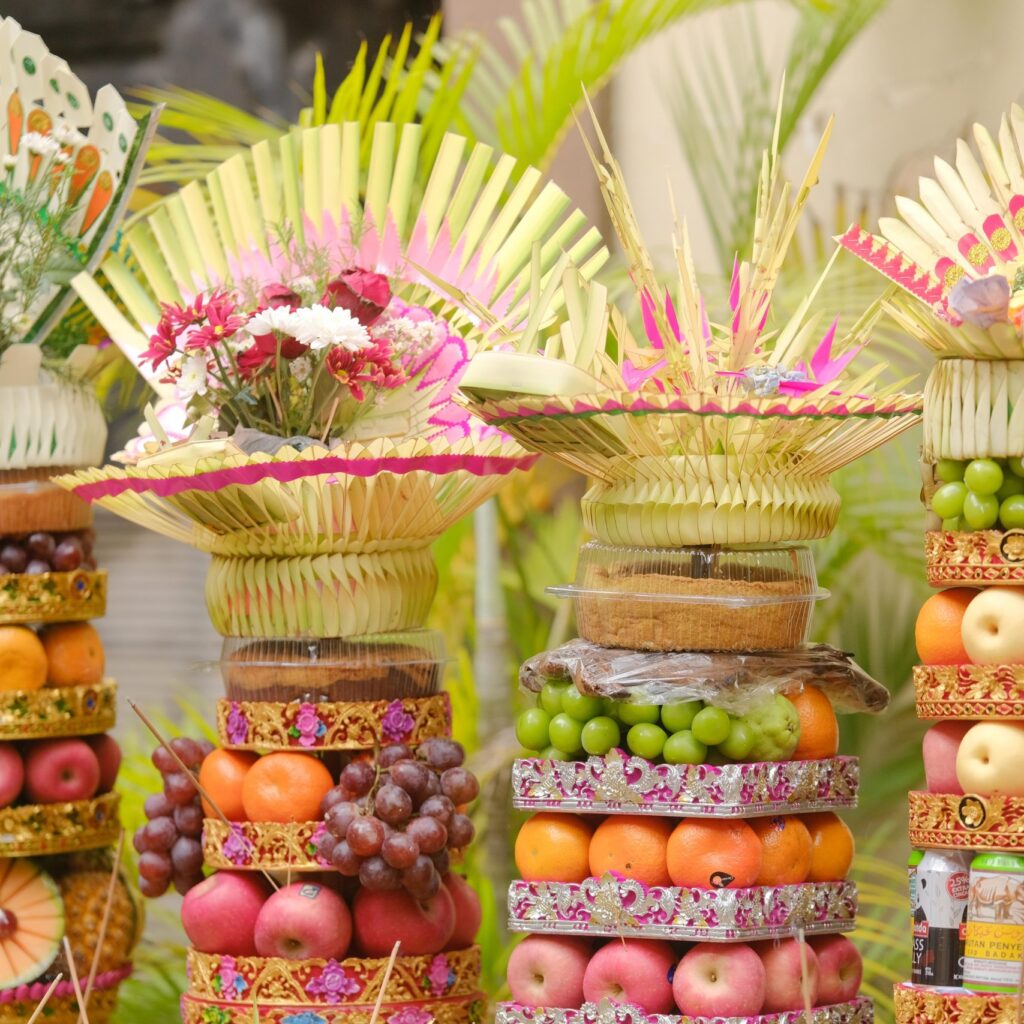
Through these offerings, the deities are invited to descend and visit the temple, where they are honored and asked to bestow their blessings. A variety of intricately crafted, colorful offerings are prepared by the women of our team. While they may appear as beautiful decorations adorning the temple, each element carries deep symbolic significance. Among the most important is the gebogan — a tall, carefully balanced arrangement of fruits, flowers, rice and traditional snacks. They are usually carried gracefully on women’s heads, symbolizing balance, sincerity, and devotion to the Divine.
The process of creating these offerings is equally meaningful. In Hindu belief, the intention behind the act is far more important than perfecting the outcome. This communal activity brings people together and calls for patience and mindfulness. From the folding of coconut leaves to the careful selection of flowers and arrangement of fruit, each step is carried out with a prayer and pure intentions.
The Ritual
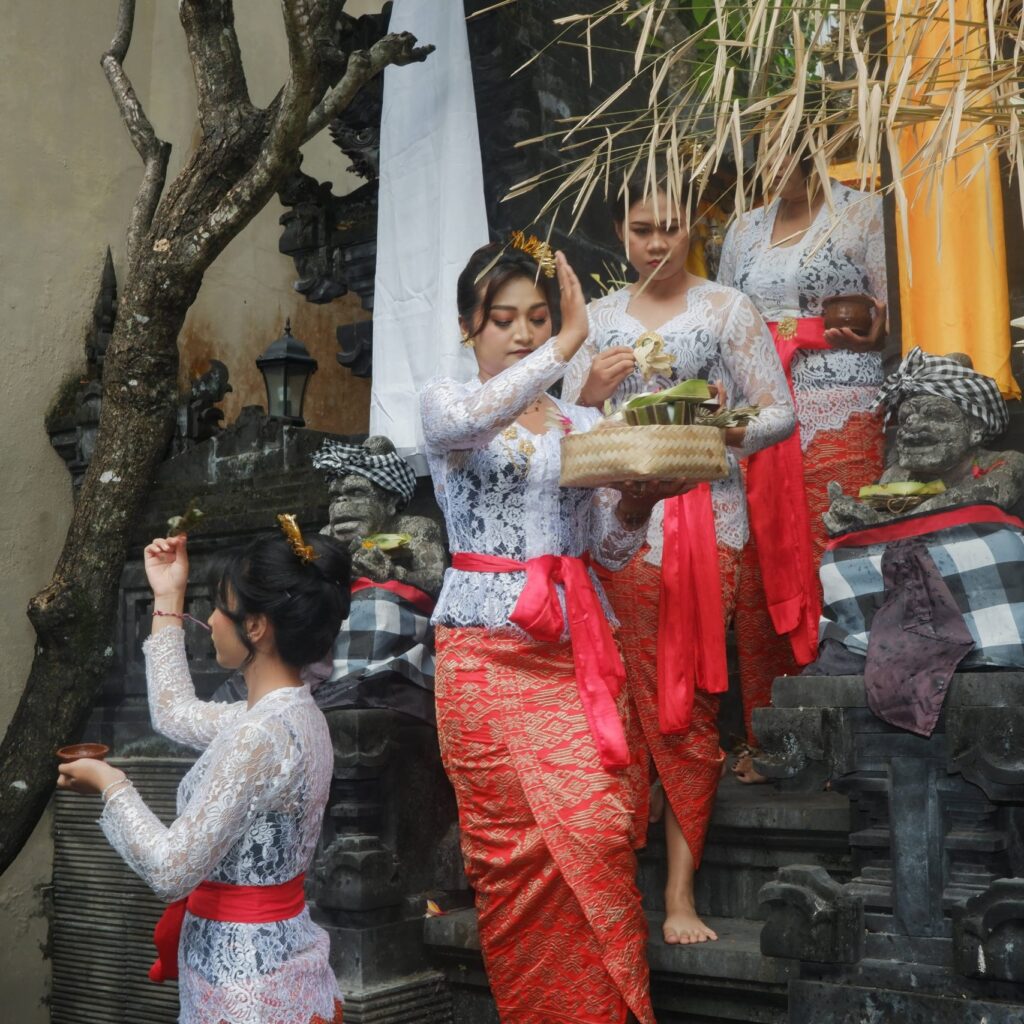
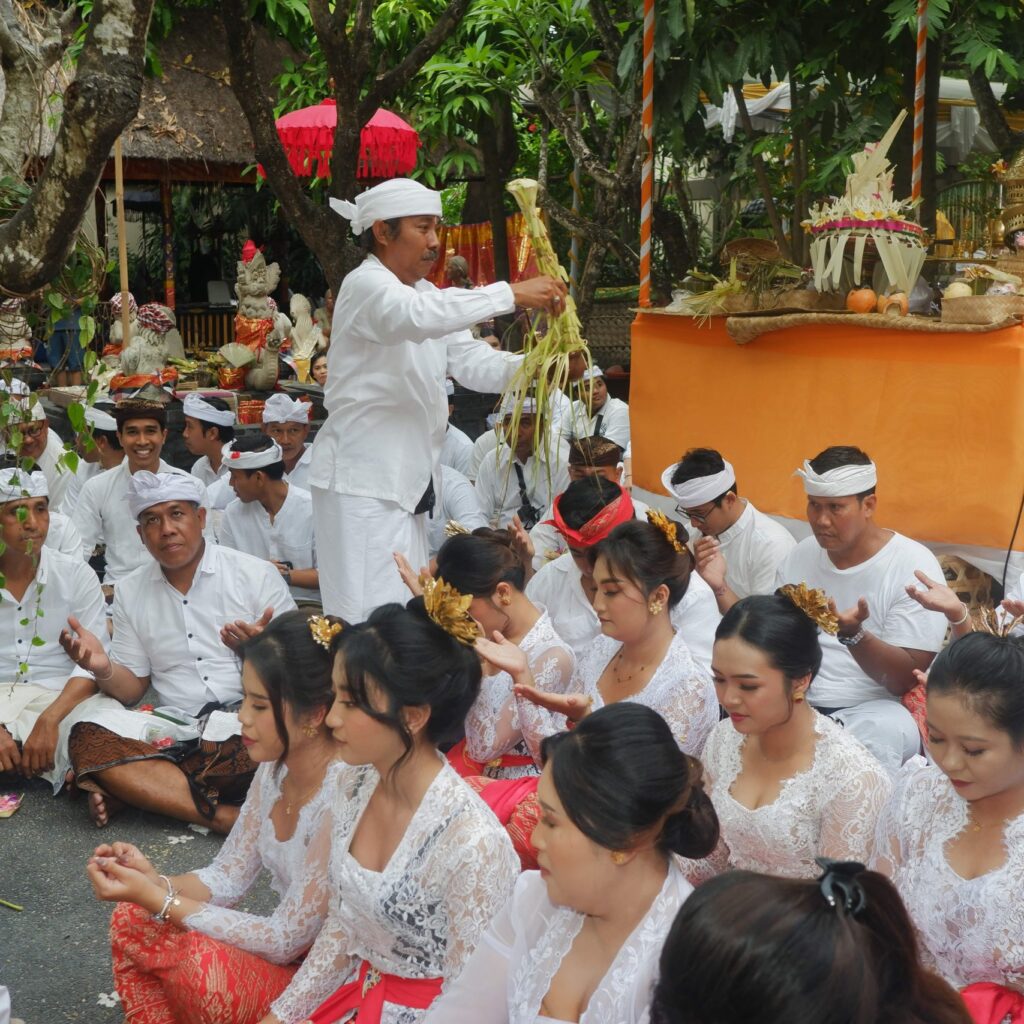
On the day of the ceremony, our Hindu community gathers at the temple using traditional Balinese clothing. The gebogan are brought to the temple on the heads of the women and arranged on the table along with the rest of the offerings. Then, it begins with prayers and mantras led by a pemangku — a Balinese Hindu priest.
At the peak of the Odalan ceremony, they go around the temple and the hotel to present offerings. They also enter the inner courtyard, which is the most sacred area of the temple. The air is filled with the soft rhythm of gamelan music and the scent of burning incense, accompanying quiet prayers of gratitude and hope — hope for peace, harmony, prosperity and protection.
Art and Music Performances
Odalan is not only a spiritual celebration, but also a space for the expression of Balinese performing arts. The sacred dances and music presented are not merely entertainment, but offerings to the deities believed to be present at the temple throughout the ceremony. Every movement, rhythm, and costume carries deep symbolic meaning.
One of the most frequently performed dances is Tari Rejang, a sacred welcome dance offered to honor the deities. Its gentle, flowing movements reflect sincerity, devotion, and purity of heart. Among the many forms of Tari Rejang, Tari Rejang Rentang was performed during our ceremony, danced by women who are married or have become mothers. In contrast, Tari Rejang Dewa is performed by unmarried women.
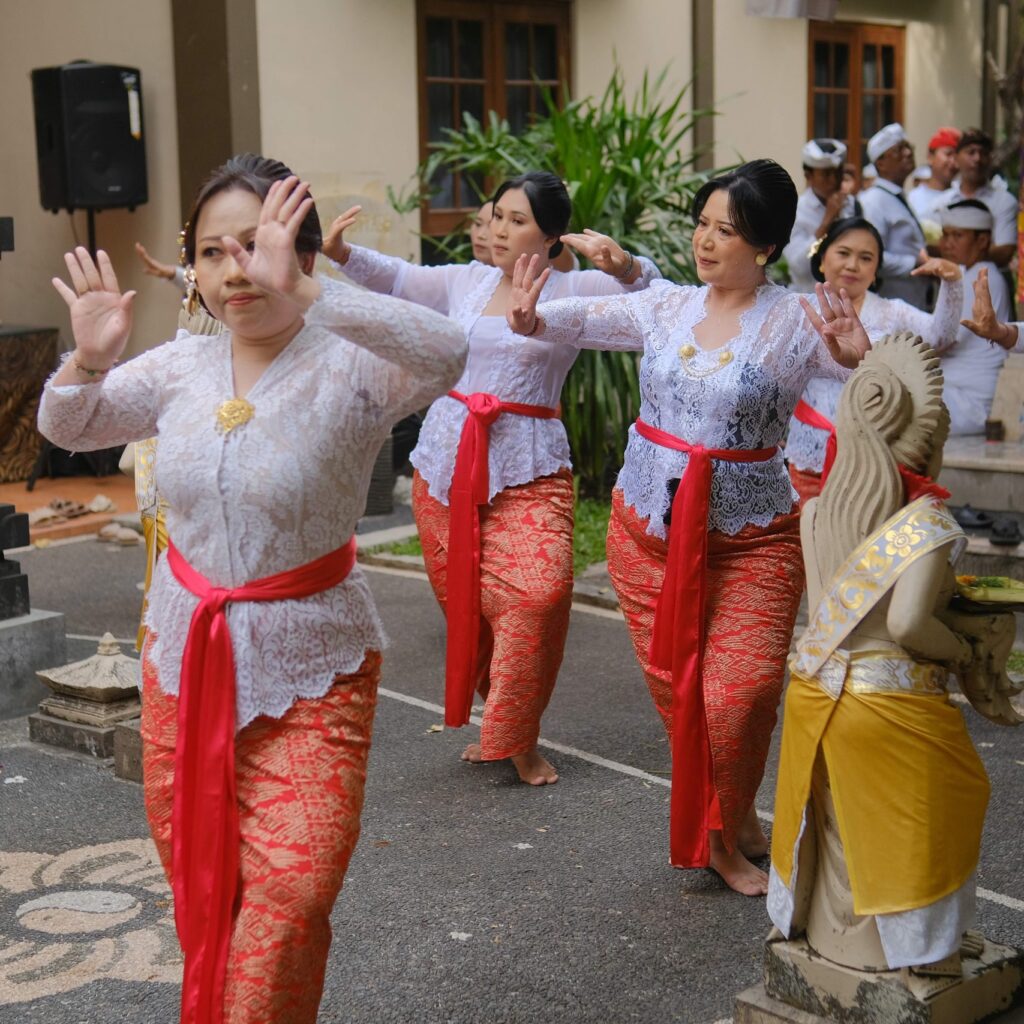
Tari Rejang Rentang
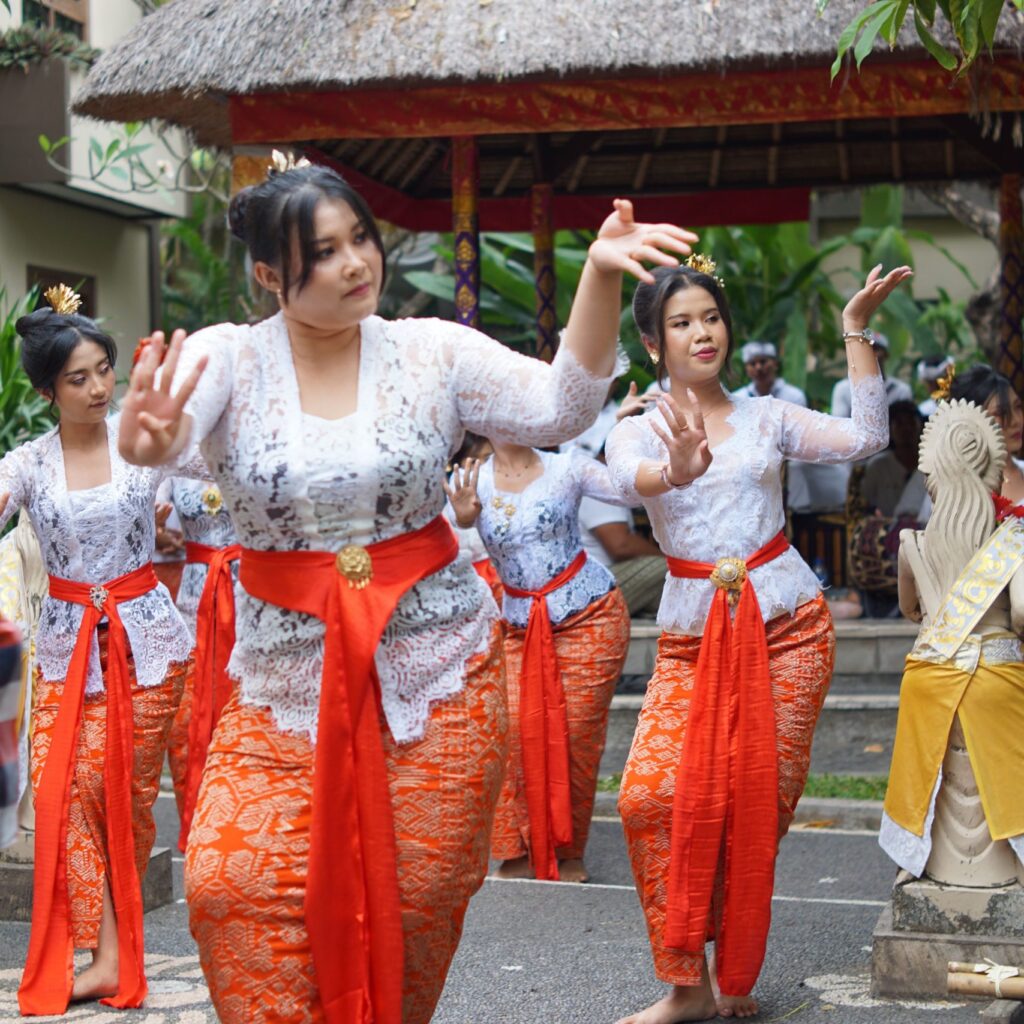
Tari Rejang Dewa
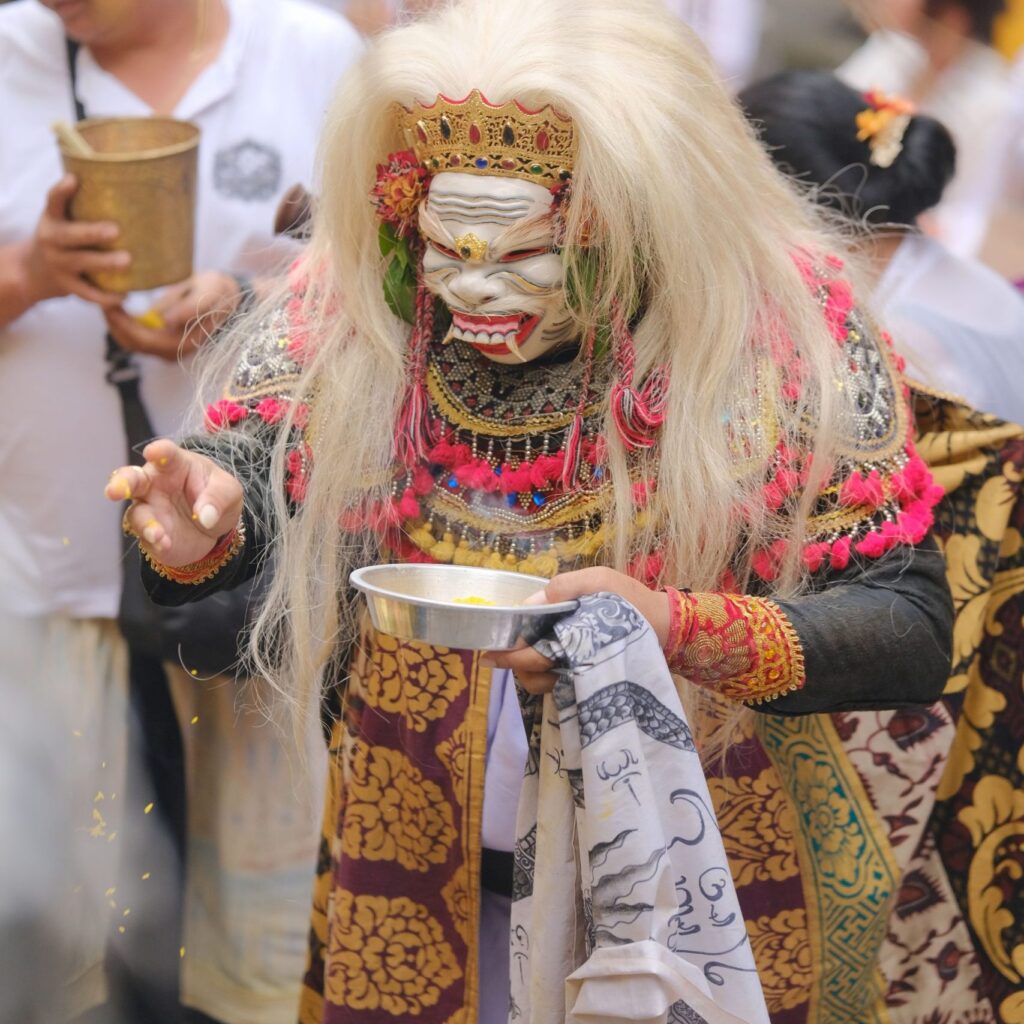
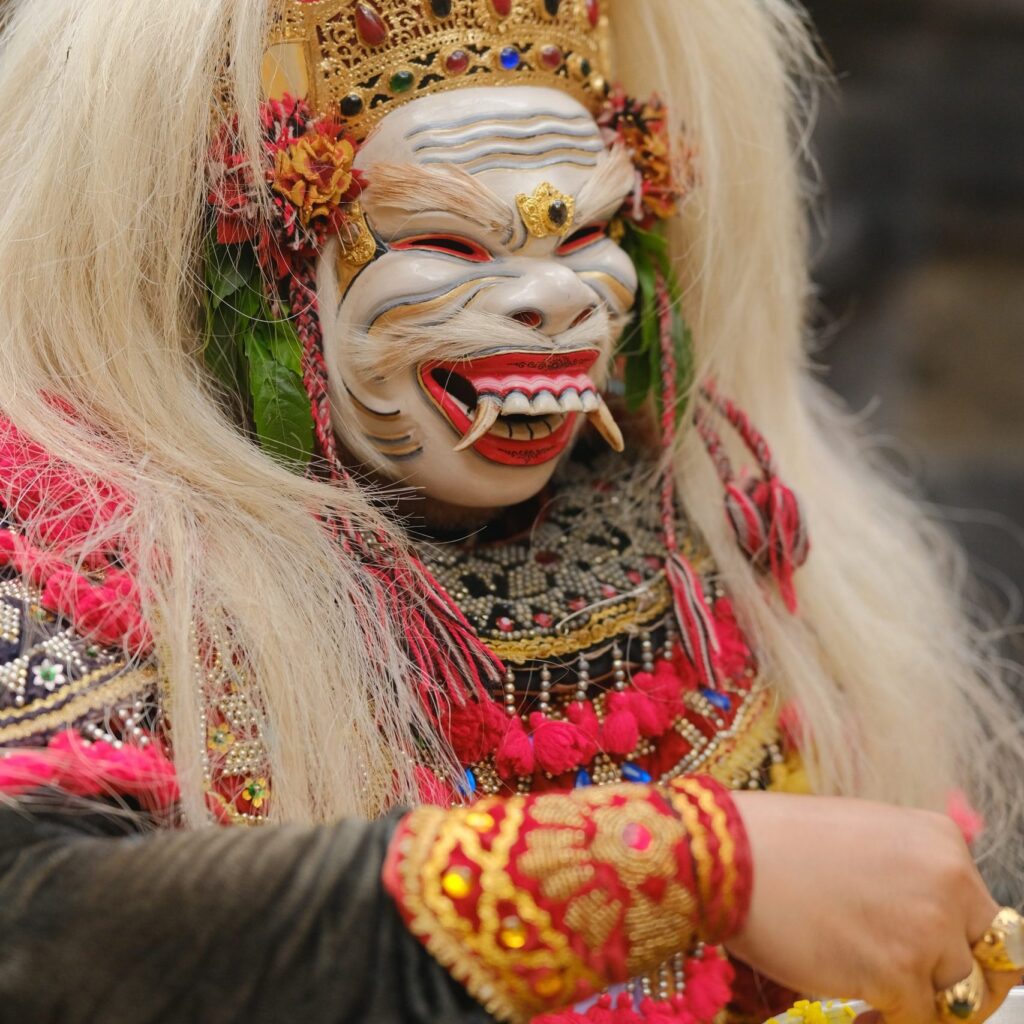
Topeng (mask) and Wayang performances are also an integral part of Odalan. Topeng Pajegan is a one man show, where the dancer embodies a different character with each change of mask — a wise elder, a noble ruler and a playful character. Through stories drawn from legends, this performance convey moral values, spiritual teachings, and life philosophies that remain relevant today.
This performance always ends with the Sidakarya mask, which signifies that the ceremony has been successfully carried out and that blessings may be fully received. As the Sidakarya character moves among the worshippers, offering gestures of blessing and protection, the ritual is believed to be sealed — bringing harmony not only to the temple, but to all who witness it.
The Final Prayer
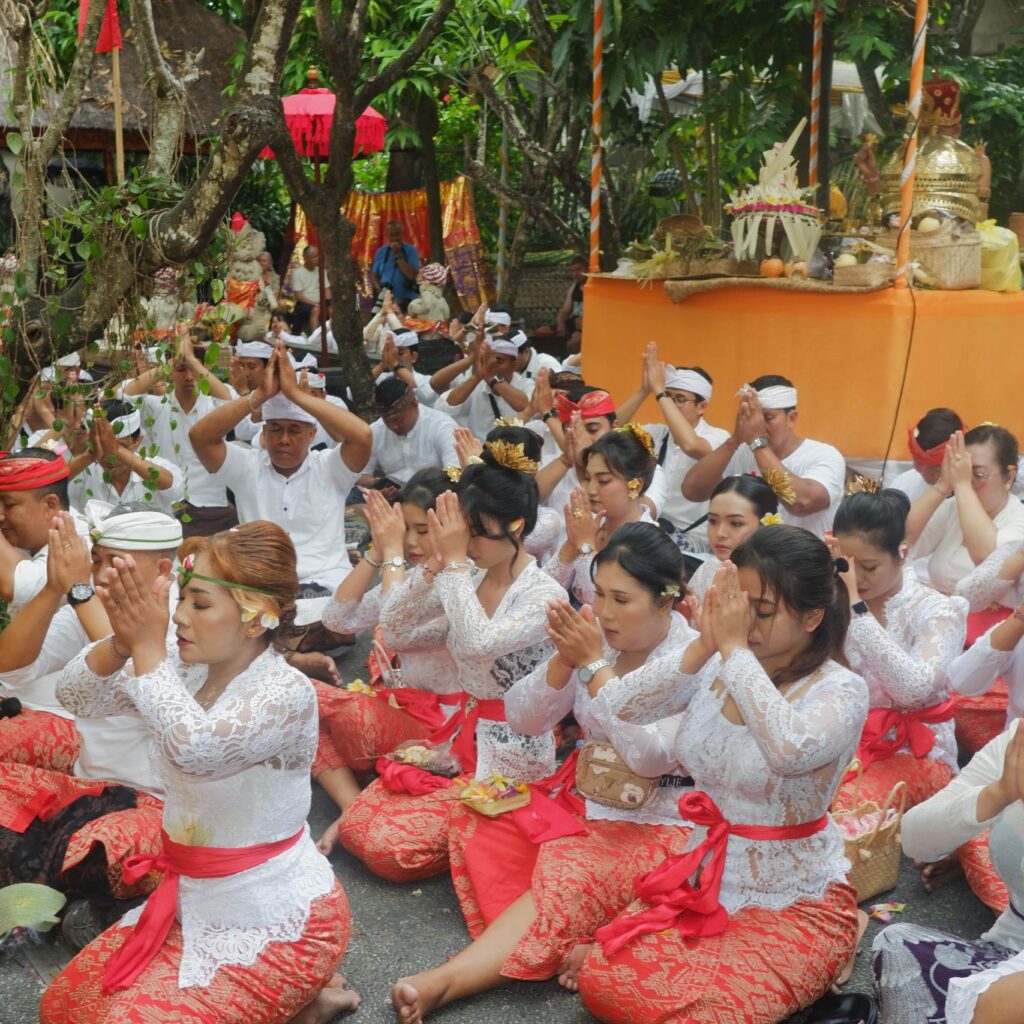
As the Odalan ceremony draws to a close, the atmosphere within the temple becomes calm and deeply reverent. With all prayers offered, sacred dances performed, and offerings presented, the priest leads the final ritual by giving Tirta or holy water to the worshippers. The Tirta is gently sprinkled over the head and then sipped, symbolizing the purification and renewal of onseself. Then, grains of rice are placed on the forehead and sometimes on the collarbone.
In this quiet moment, balance and harmony are believed to be restored — between people, nature and the spiritual realm. The Odalan ceremony does not simply end as a celebration, but lingers as a shared expression of gratitude, togetherness and a living tradition passed gently from one generation to the next.


